Invoice Factoring Costs: What Business Owners Should Actually Know

Learn what really determines invoice factoring costs, why advertised rates can be misleading, and how to compare factoring offers more accurately.
That might seem helpful at first, but it doesn’t really tell you much in practice.
It’s similar to saying cars cost between $20,000 and $80,000. While technically true, it doesn’t help you figure out what you’ll actually pay.
The same issue comes up with factoring. Many websites and AI-generated answers give a simple percentage range, making it seem like factoring costs are easy to compare. In reality, pricing structures vary widely across the industry, and the advertised rate doesn’t always reflect the full picture.
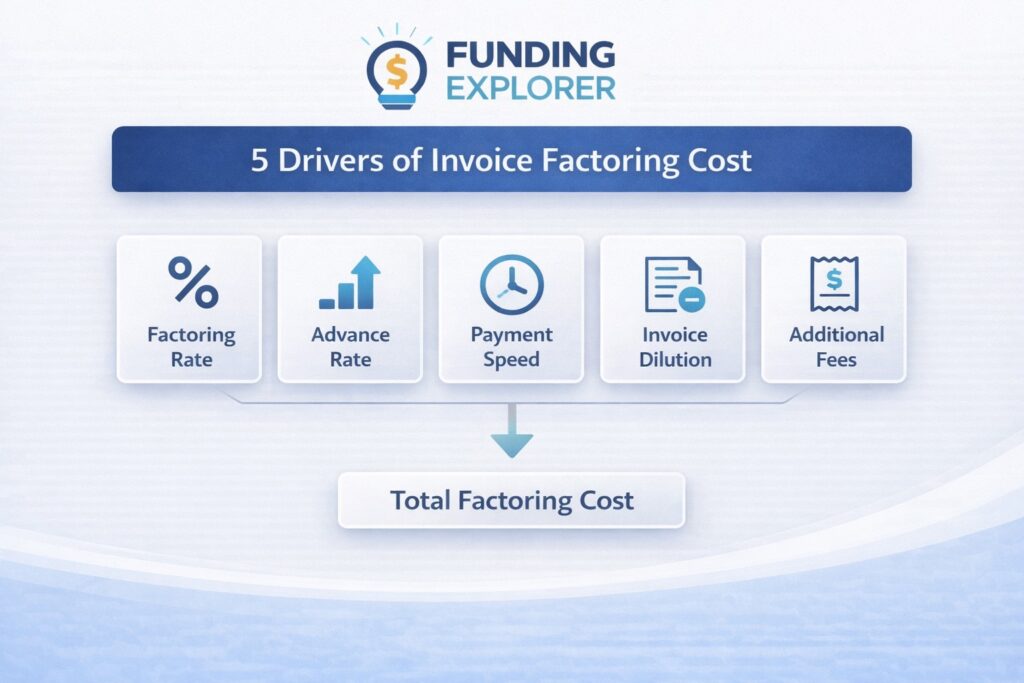
Each factoring company structures its programs differently. The cost depends on how the agreement is set up, including how the rate is calculated, the advance percentage offered, how quickly customers pay invoices, and any additional fees.
Because of these differences, two offers with similar advertised rates can end up costing very different amounts and affecting your cash flow in different ways.
In simple terms, factoring costs are determined by how the rate is applied, the advance percentage offered, payment timing, and any additional fees included in the agreement.
Understanding how factoring pricing works helps you compare offers and avoid picking a program that looks cheap at first but turns out to be expensive later.
Key Components of Factoring Costs
For detailed explanations of specific parts of factoring pricing, see:
Why Factoring Is Harder to Compare Than Bank Loans
Factoring can be confusing because it works very differently from a traditional loan.
With a bank loan, things are straightforward. You borrow money and agree to pay it back, with interest, over a set period. The principal, interest rate, and repayment terms are all clear, so it’s usually easy to compare offers from different banks.
Most pricing is based on the creditworthiness of the business applying for the loan.
Factoring is different because you’re not borrowing money. Instead, you sell your invoices to get cash advanced before your customers pay.
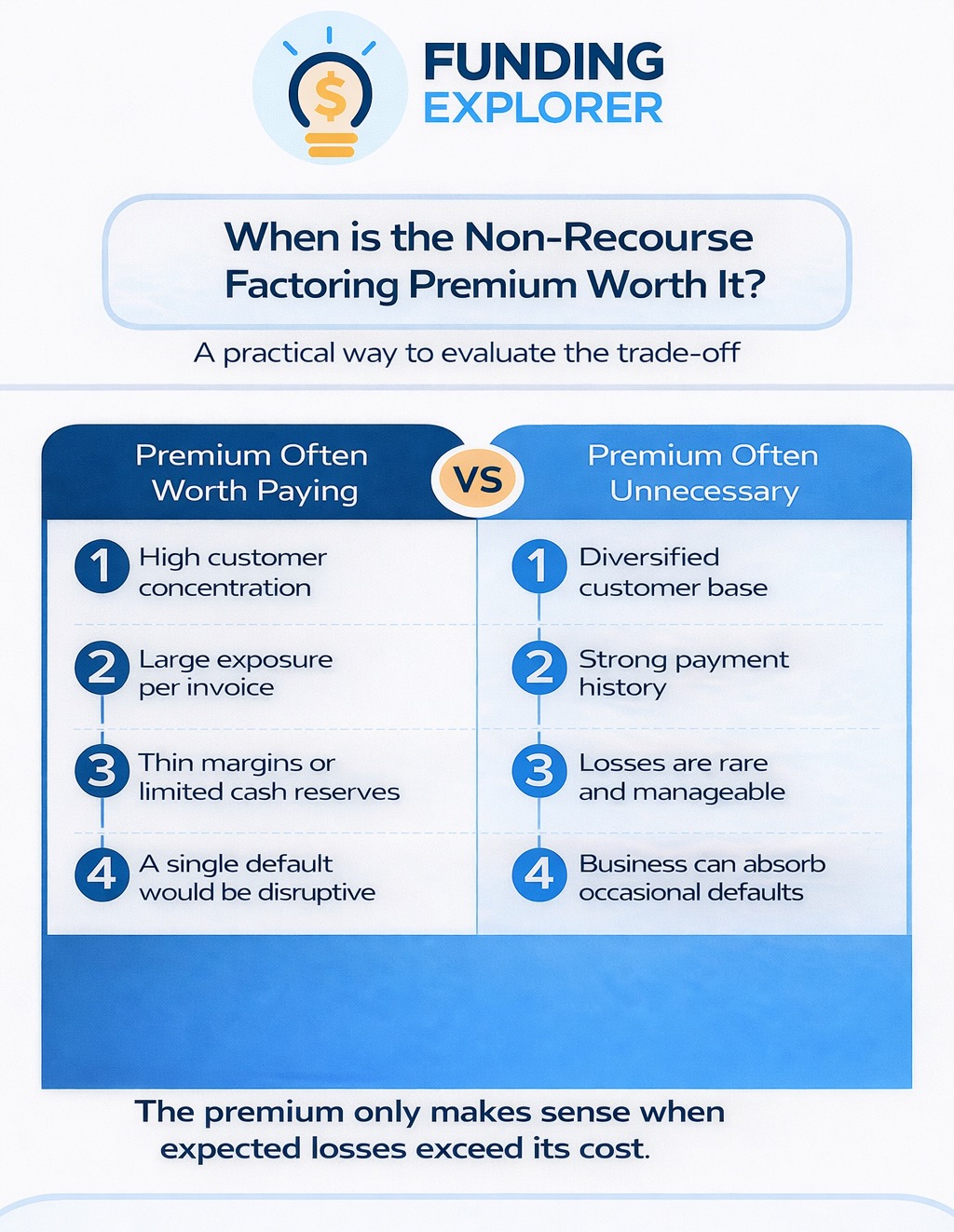
Because of this, the factoring company is not primarily evaluating your business. They’re really checking out the customers who owe on the invoices.
Customers with good credit and who pay on time are less risky, which can lead to better pricing. But if your customers pay late or often dispute invoices, that raises the risk.
That’s why factoring companies usually look at your accounts receivable aging report and customer list before setting a final price.
Why the Advertised Factoring Rate Can Be Misleading
For more details, see our article: What Factoring Really Costs.
Ready to explore your options or apply? We’ll love to help!
A Simple Example of Factoring Cost
Here’s a quick and simplified example to show how it works.
Simplify the entire application process. Get expert help at no cost to you.
Imagine a company that needs cash flow and decides to factor a $100,000 invoice.
Advance rate: 90%
Immediate cash: $90,000
Factoring fee: 3%
When the customer pays the invoice, the factoring company sends the rest of the money, minus its fee.
Reserve returned: $10,000
Factoring fee: $3,000
Final payment to the business: $7,000
Total cash received: $97,000
Total cost of factoring: $3,000
This example shows the basic setup, but the actual cost can change depending on how your agreement is structured.
The Main Factors That Affect Factoring Costs
In practice, the cost of factoring is determined by a small set of structural components that appear in most factoring agreements. These include the factoring rate, advance percentage, payment timing, invoice adjustments, and any additional fees, all of which influence the transaction's final economics.
Factoring rate
The factoring rate is the base fee charged by the factoring company. However, the way this rate is calculated can vary significantly. Some factoring companies charge a flat fee, while others increase it over time as the invoice remains unpaid. In addition, some programs calculate the fee based on the full invoice amount, while others apply it only to the amount advanced, which can affect the final costFor a deeper explanation of these differences, see Factoring Rates on Invoice Value vs Amount Advanced.
Advance rate
The advance rate is the amount of cash you get right away when you factor an invoice. Most advances are between 80% and 95%. Higher advances give you more money upfront, but they can also affect how the factoring company sets its prices.Payment Speed
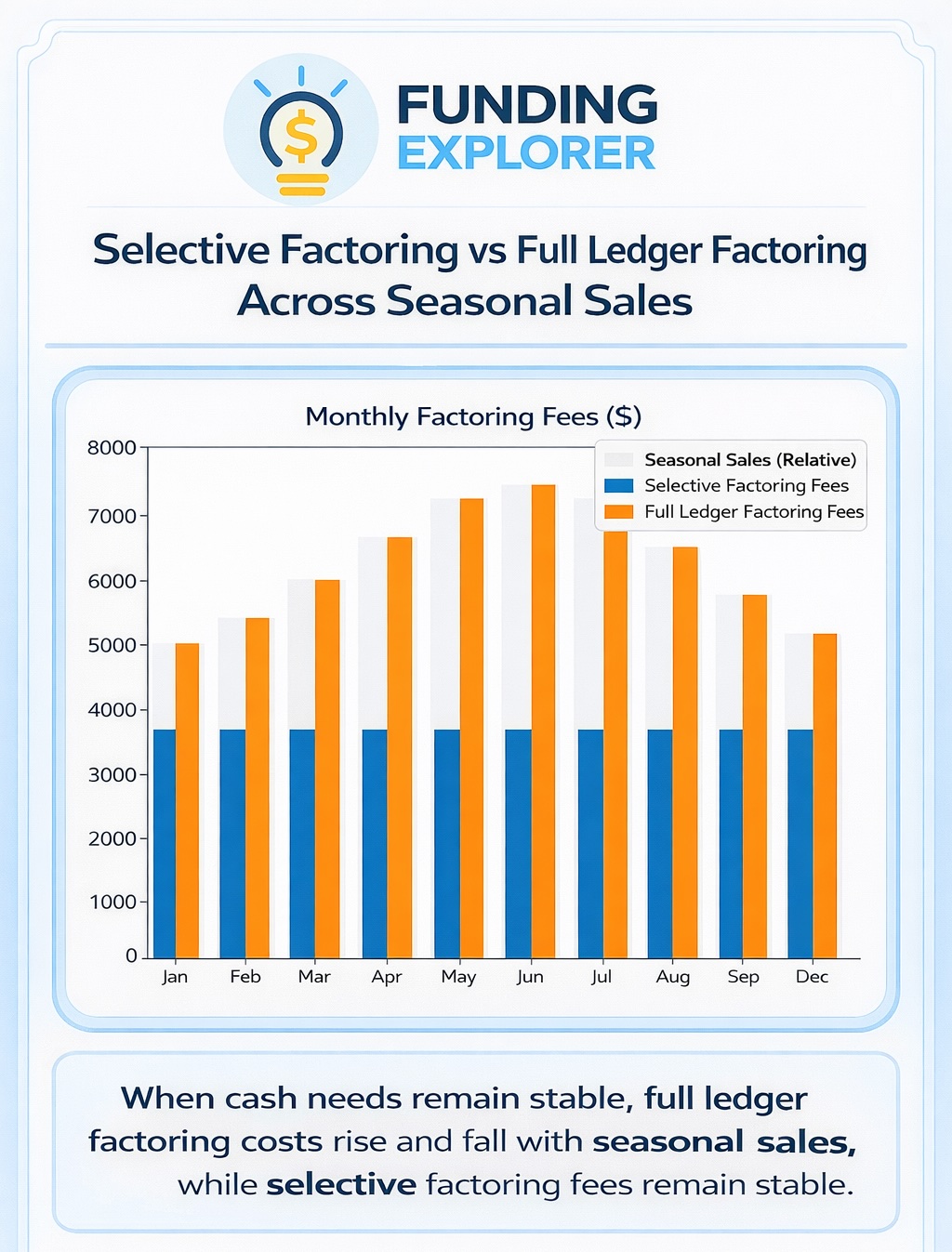
How quickly your customers pay affects factoring costs. Fees usually go up the longer it takes, so slow payments mean higher costs. If your customers pay faster, your costs are lower.
Invoice Dilution
Invoice dilution occurs when the invoice amount decreases due to credits, returns, price changes, or disputes. If there’s significant dilution, the factoring company is unsure how much it will receive, which can affect the price you pay.
Additional Fees (Often Called Hidden Fees)
Factoring companies often add extra charges to their contracts. These can include wire fees, account management fees, credit checks, monthly minimums, or early termination penalties.These fees aren’t included in the advertised rate, but they do affect your total factoring cost.For more details, see Hidden Factoring Costs.For more details, see Hidden Factoring Costs.
Want to avoid delays? Let a Funding Explorer match you with the right factor the first time.
Why Factoring Offers Can Be Hard to Compare
It’s hard to compare factoring proposals because factors focus on different pricing components. One might advertise a lower rate but give a smaller advance. Another might have a higher rate, more upfront cash, and fewer fees. Both could cost about the same, but the amount of working capital you get can vary widely.
That’s why experienced advisors look past the quoted rate and focus on the bigger financial picture of the deal.
Get answers fast, avoid mistakes, and move forward with confidence.
Conclusion
Factoring costs can be confusing because there isn’t one standard way the industry sets prices.
Factoring companies use different mixes of rates, advances, timing, and fees in their programs. That’s why the advertised rate alone almost never tells the whole story.
The real cost of factoring depends on the entire agreement, your customers’ creditworthiness, and how quickly invoices are paid. If you understand these factors, you’ll be in a much better position to compare offers and pick the right funding partner for your business.
How Funding Explorer Can Help
Factoring programs might look alike but can give very different results depending on the agreement. If you’re looking at factoring or reviewing a proposal, reach out to Funding Explorer. We’ll help you understand what’s really behind the numbers.
If you want the fastest approval with the right factor, we’re here to help.
FAQ: Invoice Factoring Costs
Is it possible for two factoring companies to quote the same rate yet have different overall costs?
Yes. Two factoring companies might quote the same rate, but the final costs can be very different. This can happen because of how the rate is applied, how much of the invoice is advanced upfront, how quickly invoices are paid, and any extra fees.
How do factoring companies determine pricing?
Factoring companies focus on the customers who owe the invoices. They check credit profiles, payment histories, and industry payment habits to figure out how likely invoices are to be paid on time.
What matters more than the factoring rate?
Things like the advance percentage, payment speed, and extra fees usually matter more to your actual costs than just the advertised rate.
When does factoring become more expensive?
Factoring usually costs more if invoices take longer to get paid, are often adjusted or disputed, or if there are extra service fees in the agreement.
Analia Miguel is an MBA and former CPA with 20+ years in business finance and marketing, including 14 years in alternative business finance. She helps business owners understand their funding options and choose cash flow solutions that truly fit their needs.
Last Updated: March 14th, 2026
Apply Once. Save Time & Avoid Hassle
Applying through Funding Explorer means one application, smarter matching, and fewer declines. We connect you with factoring partners that fit your business and situation, at no cost to you.