Business Funding Expert Insights

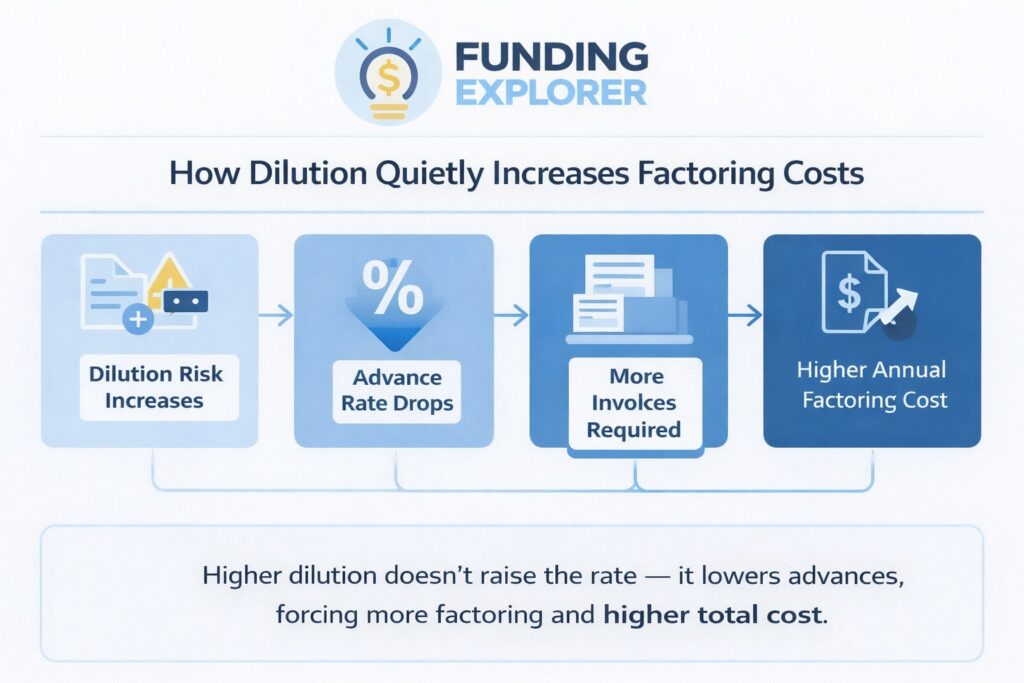
How dilution increases factoring costs

How Risk and Dilution Quietly Increase Factoring Costs

Dilution affects more than collections. It directly influences advance rates, usable cash, and total factoring cost. This article explains how higher dilution can quietly force businesses to factor more invoices and pay higher fees, even when the factoring rate stays the same.
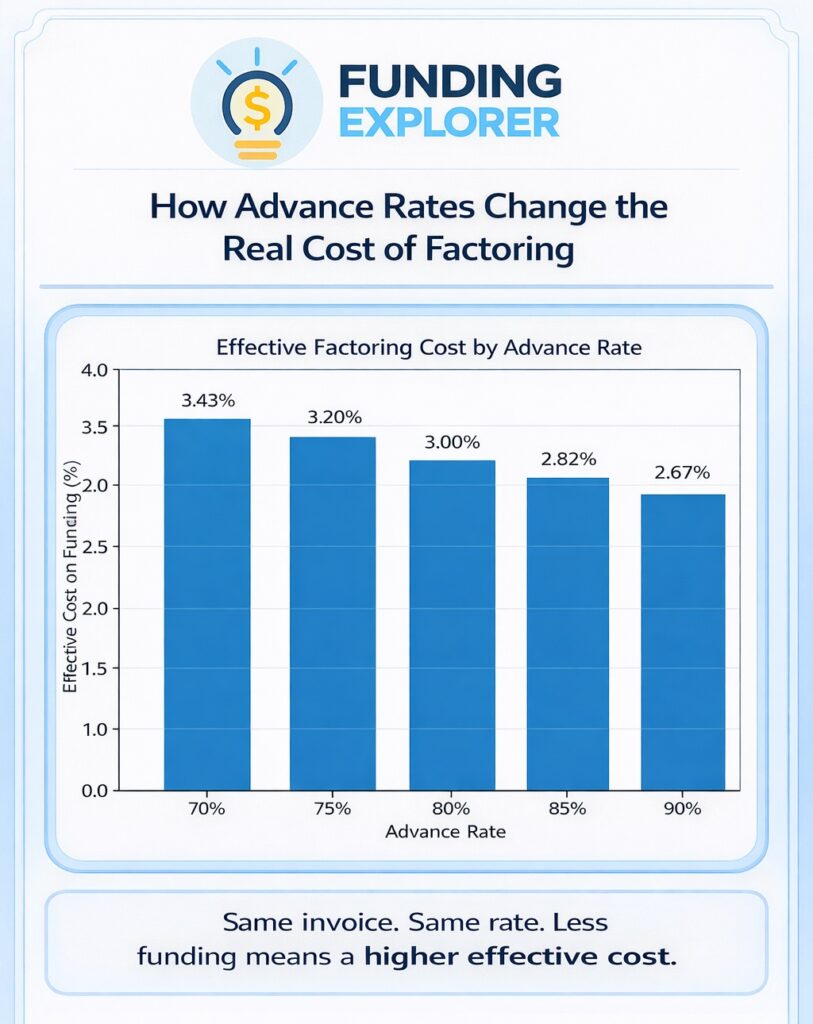
How advance rates affect factoring costs

How Advance Rates Change the Real Cost of Factoring

Advance rates play a much bigger role in factoring cost than most businesses realize. Even when factoring rates are the same, lower advances can force companies to factor more invoices, increasing effective cost and total annual fees. This article explains how advance rates shape real factoring costs and why focusing only on the quoted rate often leads to misleading comparisons.

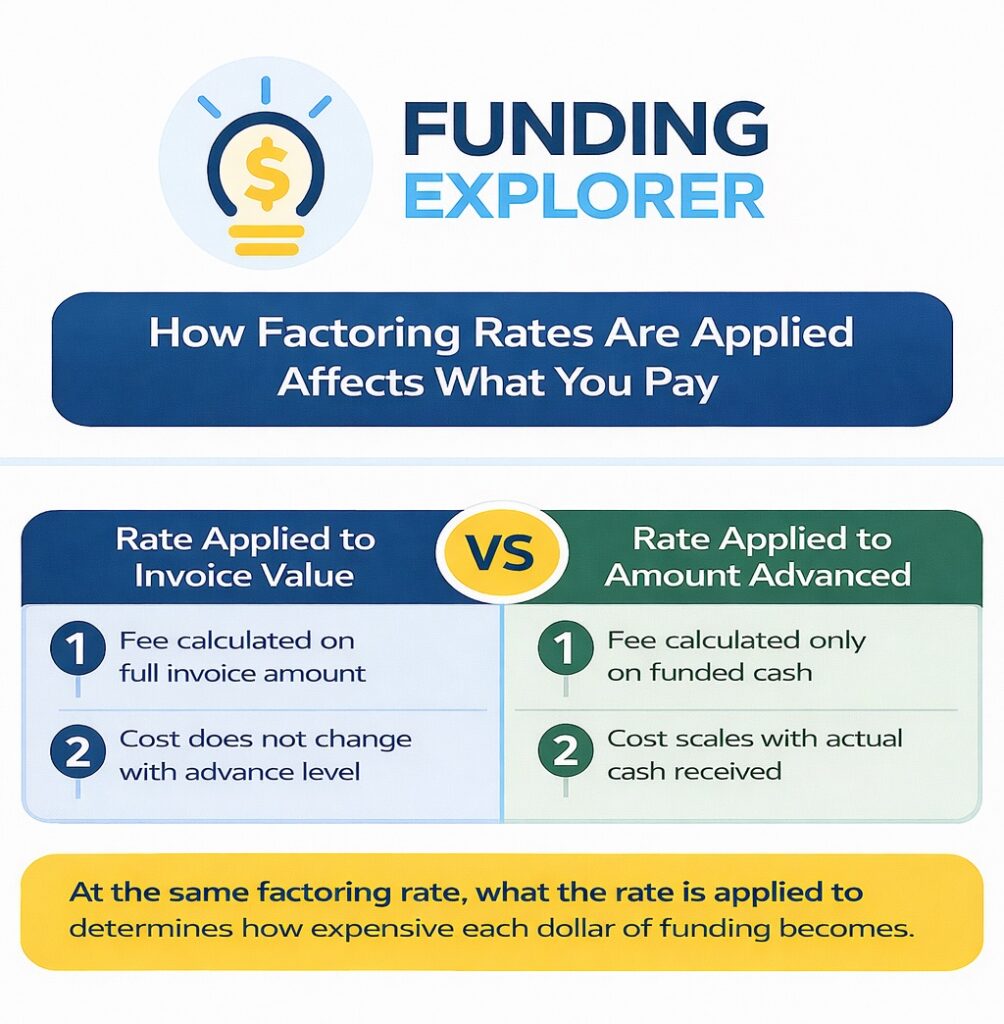
what invoice factoring really costs

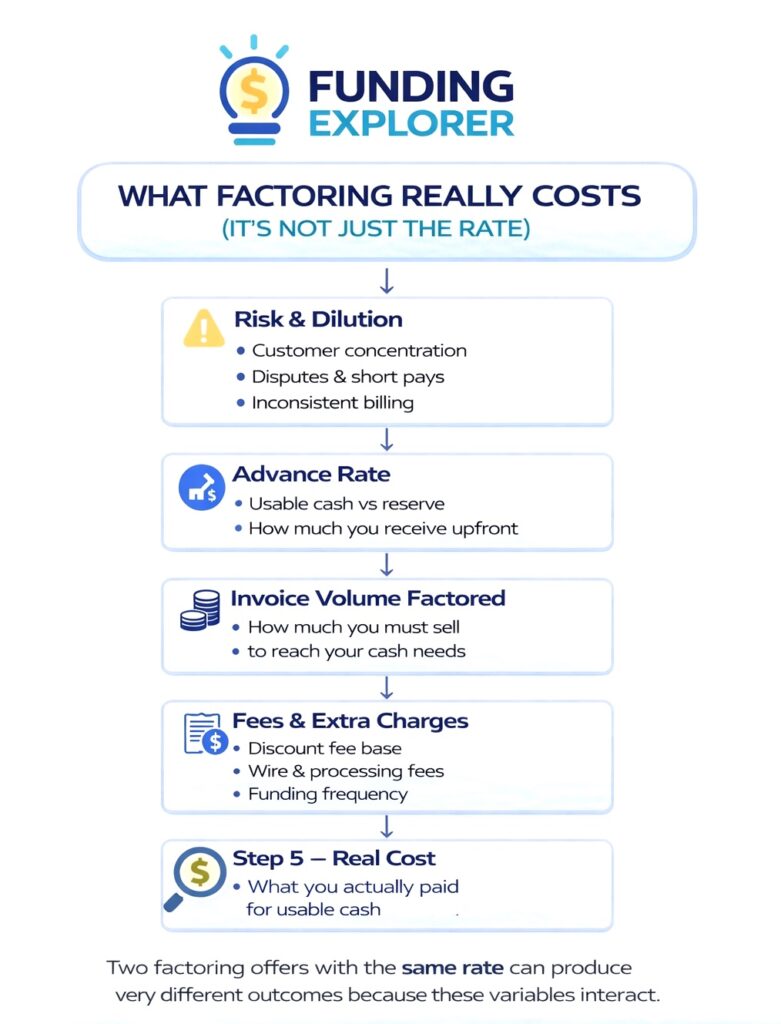
What Factoring Really Costs: How Fees, Advances, and Risk Interact

Factoring costs are not defined by the rate alone. Fees, advance percentages, risk, and deal structure all affect how much usable cash a business actually receives. This article explains how those elements interact and why two factoring offers with similar rates can produce very different real costs.

Is Non-Recourse Factoring Premium Worth

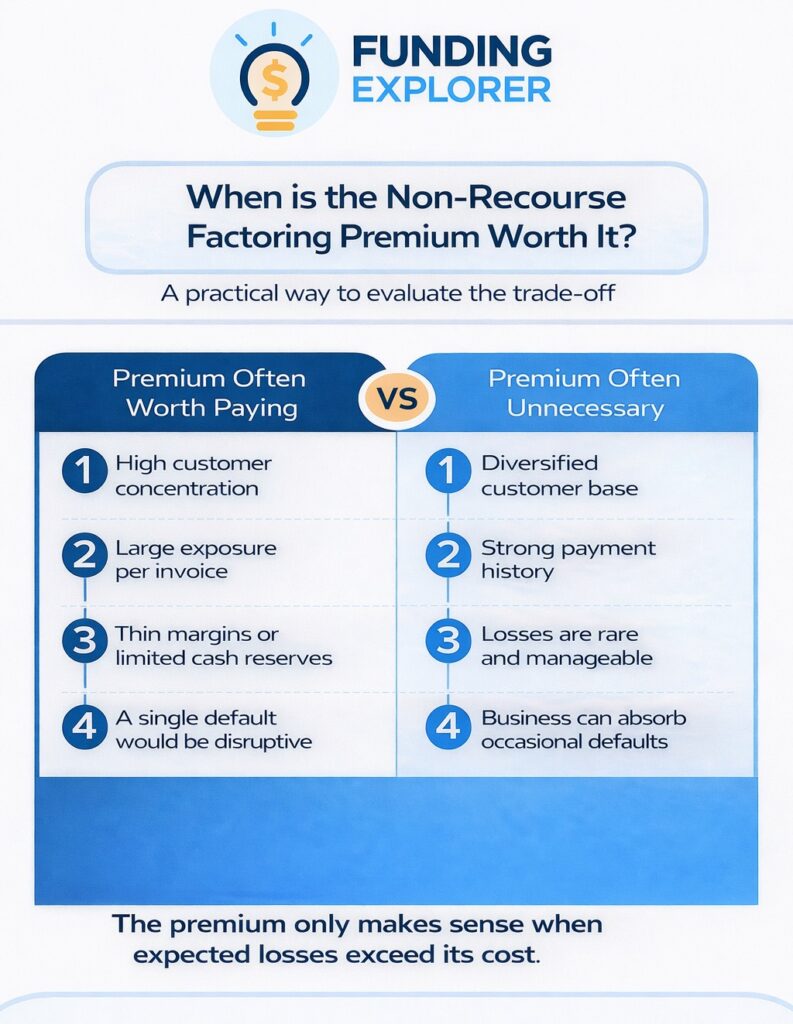
Non-Recourse Factoring: Is It Worth the Premium?

Non-recourse factoring can reduce certain credit risks, but it comes at a premium and does not cover every situation. This article explains what non-recourse really means, what events are covered, and how to decide whether the added cost makes sense for your business.

Selective Factoring vs full ledger factoring

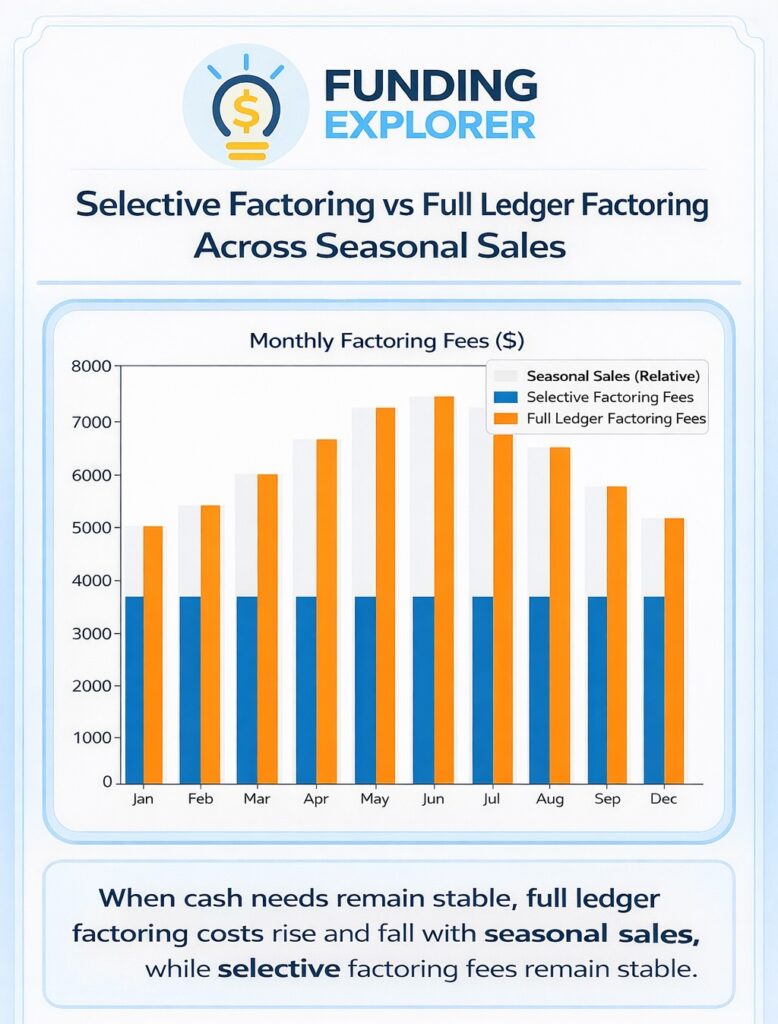
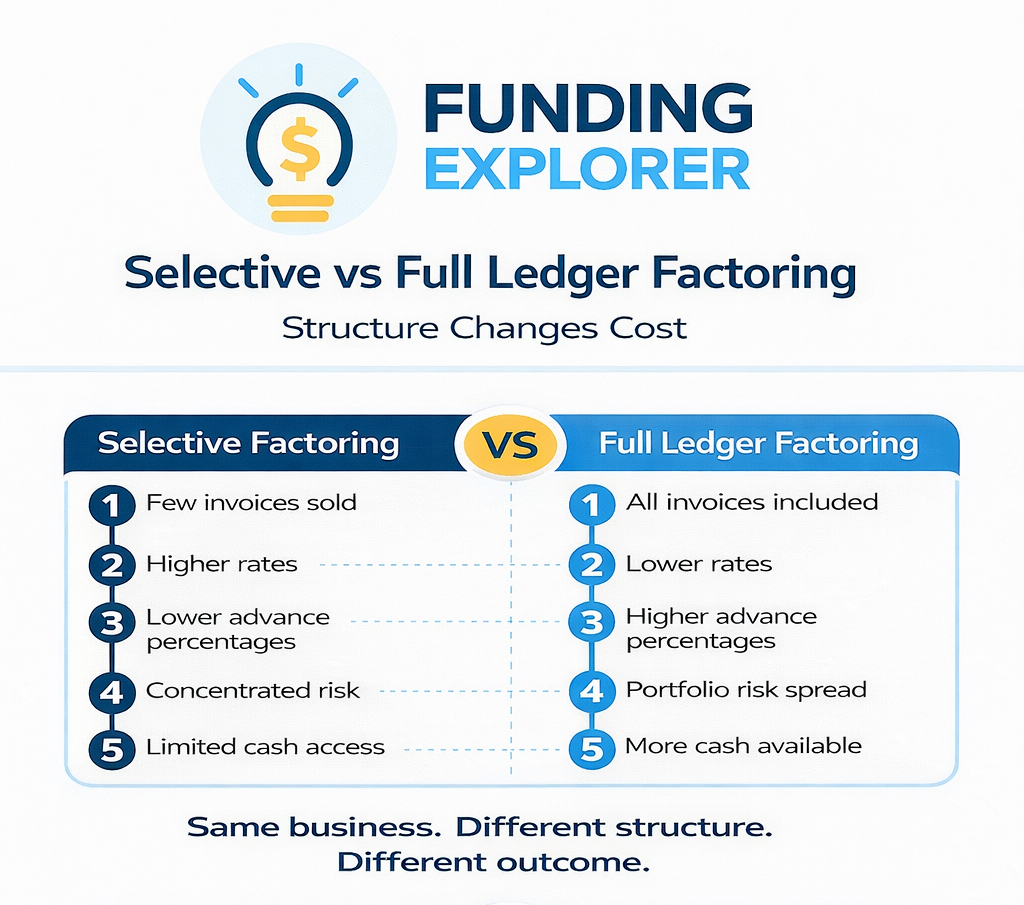
Why Full Ledger Factoring Can Lower Factoring Rates and Overall Cost

Factoring rates are not fixed. They are shaped by risk, predictability, and how receivables are structured. Full ledger factoring often reduces overall cost by spreading risk across all invoices, improving advance rates, and increasing cash flexibility, sometimes at a similar total cost to selective factoring.

Invoice factoring for wholesale companies

Invoice Factoring for Wholesalers: Stay Stocked, Competitive & Cash-Ready

You run a wholesale business that keeps your customers stocked and running. You’re the one buying in bulk, managing inventory, handling freight, and getting orders out the door fast, usually long before your customers ever pay their invoices. You carry the costs up front, but the money often takes weeks or even months to come back.

heavy equipment rental factoring cash flow

Factoring for Equipment Rental & Heavy Equipment Supply Companies

Most construction firms, industrial contractors, and project managers take 30, 60, or even 90+ days to process invoices, long after your machines have been delivered, assembled, fueled, and serviced.

In the meantime, you still have to cover insurance, maintenance, operator wages, repairs, transportation, and loan payments on expensive fleets.

factoring for site preparation contractors

Factoring For Site Preparation Companies

Whether you’re grading land, clearing trees, or hauling fill dirt, you take on huge expenses before a general contractor or developer even cuts their first check.

Fuel, heavy equipment, payroll, and subcontractor costs all come due long before your invoices are approved. It’s not unusual for payments to stretch 60, 90, or even 120 days, leaving your crew ready to work but your cash flow on pause.

Factoring for facility maintenance contractors

Invoice Factoring for Facility Maintenance Contractors

You keep everything working, the lights, the air, the systems that no one notices until they fail. Whether you manage HVAC units, electrical work, or ongoing maintenance contracts, your business keeps other businesses open and comfortable.

But getting paid on time? That’s another story.