
Industry-Specific Factoring Guidance From Strategic Factoring Brokers

Many businesses ask which industries use invoice factoring and how factoring works in different sectors. Let’s talk about it.
Payment cycles, contract terms, margins, and customer behavior vary a lot depending on the industry you’re in. A staffing firm covering weekly payroll has very different cash flow pressures than a government contractor waiting on project approval or an equipment rental company managing seasonal demand.
That’s why factoring should be structured around how your industry actually gets paid, not just around a rate.
Funding Explorer works as a strategic factoring broker, helping business owners compare options intelligently and match with factoring partners that understand their industry and cash flow reality.
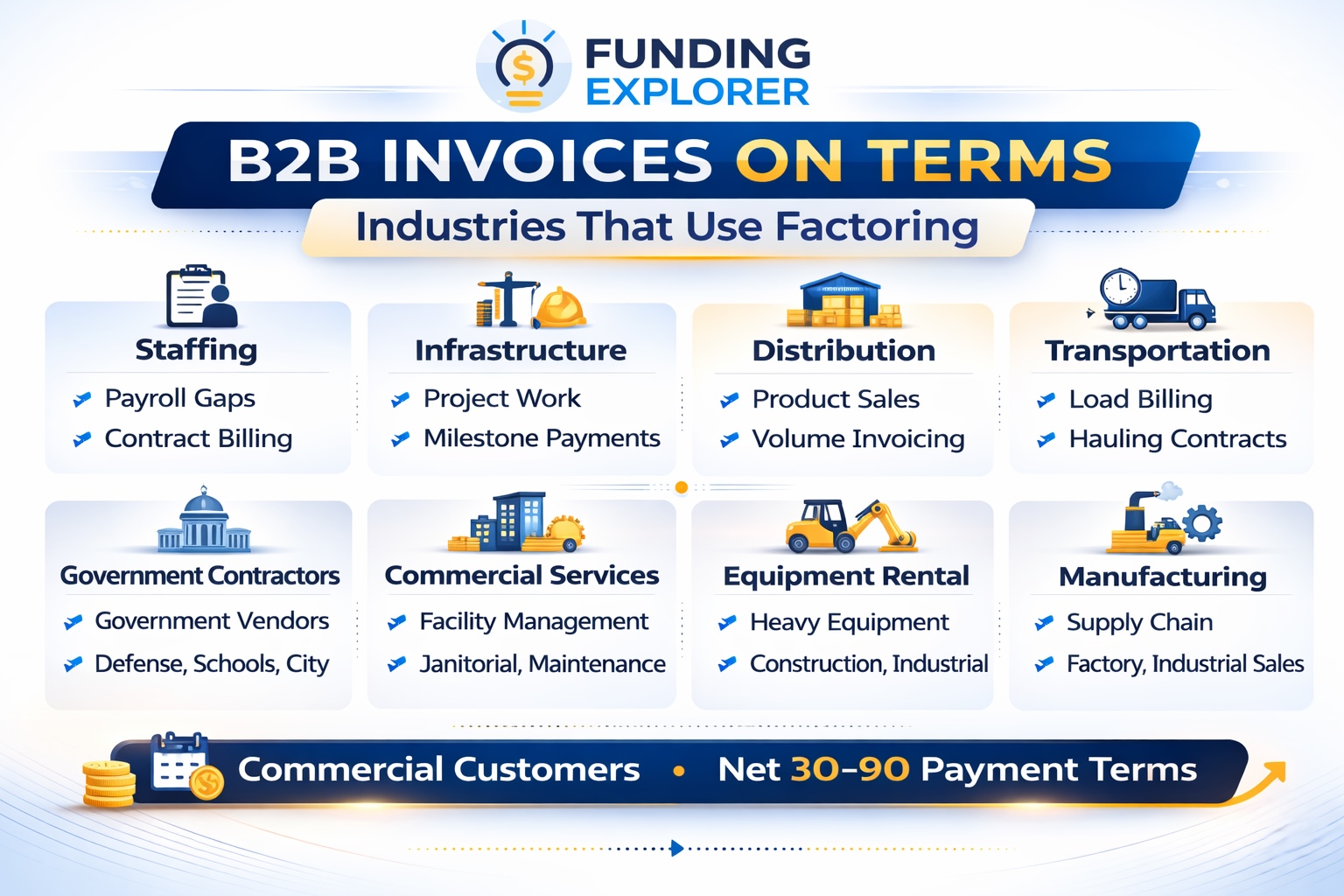
Staffing Factoring (Payroll-Driven Businesses)
Staffing companies usually face one very clear challenge:
You have to make payroll every week, but your customers may not pay you for 30, 45, or even 60 days.
That gap can create serious pressure, especially when you’re growing. You might have more contracts and more revenue, but cash still feels tight because it’s tied up in unpaid invoices.
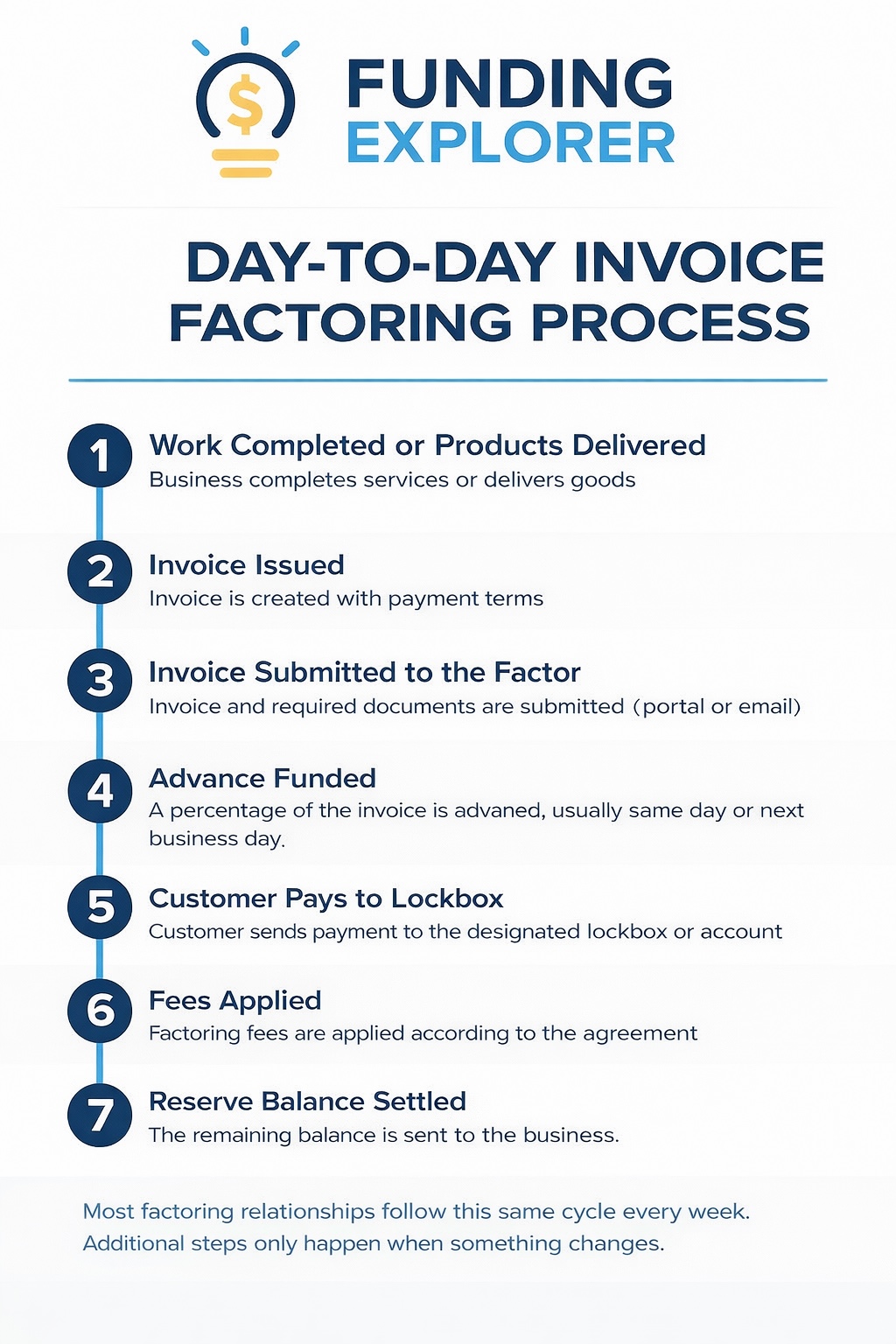
Invoice factoring is commonly used in staffing to bridge that gap. It allows you to turn those receivables into working capital so payroll, taxes, and operating expenses stay covered.
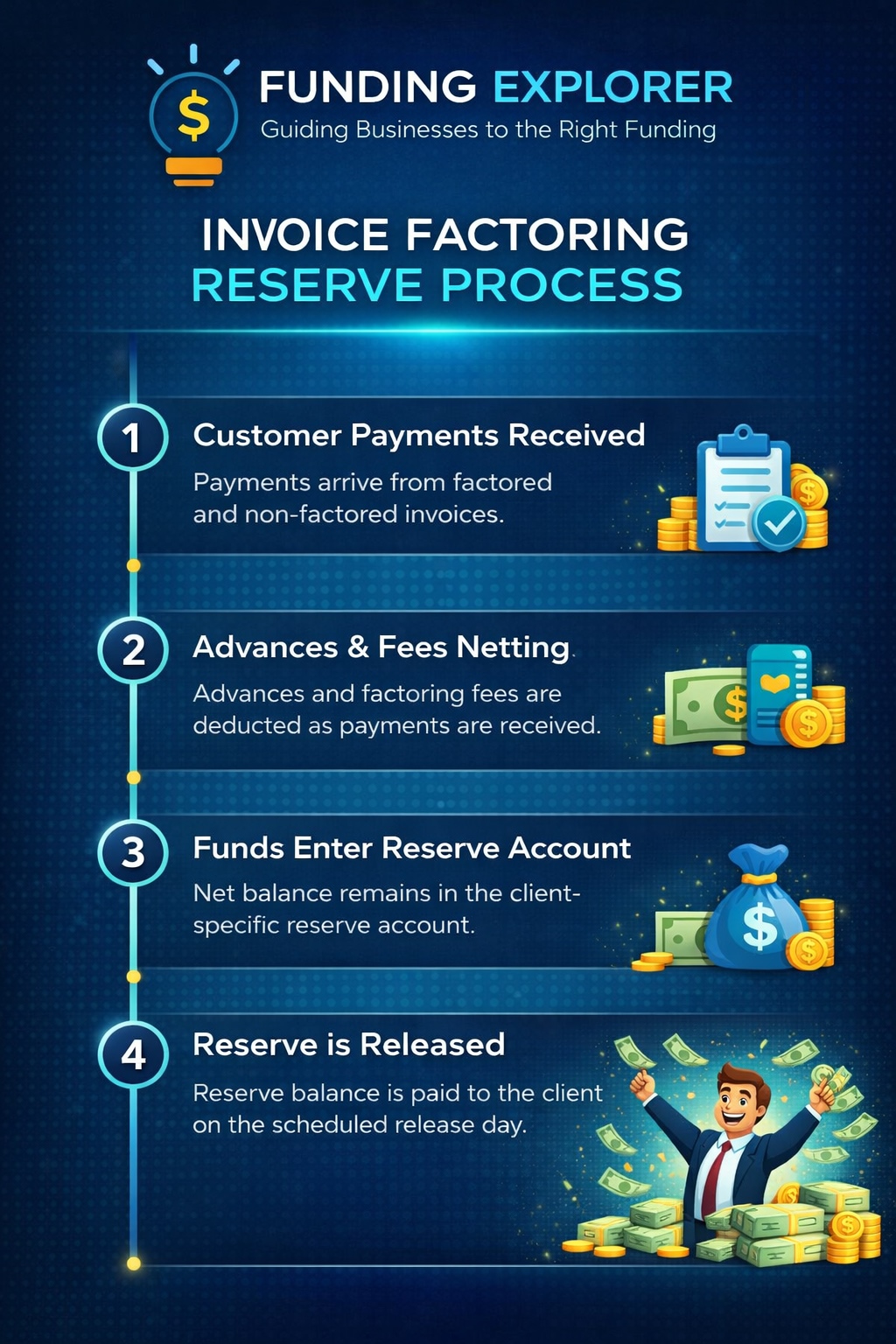
But structure matters. Advance rates, fees, and reserve timing can directly impact your margins. In a payroll-driven business, even small differences in cost can add up quickly.
Includes:
Infrastructure Contractor Factoring
If you work on infrastructure or field service projects, you already know how unpredictable cash flow can be.
You might bill in milestones. You might wait for inspections before an invoice is approved. Sometimes, retainage is held back.
Meanwhile, you’re paying crews, fuel, equipment, and materials upfront.
That gap between doing the work and getting paid is where factoring can help, but only if it’s structured properly for how your industry bills.
Explore:
Equipment Rental Factoring (Asset-Heavy Businesses)
Equipment rental companies and similar operations often deal with big invoices, seasonal demand, and a small number of large customers.
You may have strong revenue on paper, but if customers pay in 30–60 days, cash can still feel tight.
Factoring can help turn those invoices into working capital faster. The key is making sure the advance rate, fees, and reserve timing match your operating cycle.
Distributor & Wholesale Factoring
Distributors and wholesalers usually run on volume. You move product, send invoices, and wait to get paid, often on thinner margins.
When margins are tight, structure matters even more. Two factoring offers with the same “rate” can impact profit very differently depending on timing, reserves, and contract terms.
Factoring can stabilize working capital, but it must be aligned with your margin profile.
Service Contractor Factoring (Recurring Contract Services)
Many service businesses have predictable billing, but delayed payments.
You may invoice every month, but customers still take 30–60 days to pay. Meanwhile, you’re covering payroll, supplies, and equipment.
Factoring can help smooth cash flow so growth doesn’t strain your operations.
Includes commercial cleaning, facility maintenance, pest control, IT service providers, and other B2B contract-based businesses.
Explore:
- Invoice Factoring for Commercial Cleaning Companies
- Invoice Factoring For Facility Maintenance Contractors
- Invoice Factoring For Pest Control Companies
- Invoice Factoring For IT Service Companies
- Invoice Factoring For Software-As-A-Service Companies (SaaS)
- Factoring for Medical Transportation Companies (NEMT)
Government & Public Sector Factoring
If you invoice government agencies or work as a subcontractor on public projects, you may already know how slow and complex payments can be.
There can be compliance rules, pay-when-paid clauses, approval layers, and extended disbursement cycles. Even profitable projects can create cash flow strain while you wait to get paid.
Factoring in this space requires careful structuring and a partner that understands government contract dynamics.
Transportation Factoring
In transportation, you complete the load today, but payment may not come for weeks.
Broker payment cycles, proof-of-delivery processing, and billing delays can create gaps between delivery and cash.
Factoring is commonly used to close that gap and keep trucks moving. The right setup should support fuel, payroll, and growth without creating unnecessary costs.
Includes freight, car hauling and similar logistics segments.
Why Industry Fit Matters
- How quickly your customers actually pay
- How reserves are held and released
- Contract minimums and termination clauses
- Risk patterns in your industry
- Customer concentration
Funding Explorer helps business owners evaluate factoring based on true cost and real-world fit, not just advertised rates or marketing claims.
Not Sure Where You Fit?
Some businesses operate across multiple industries or serve different types of customers.
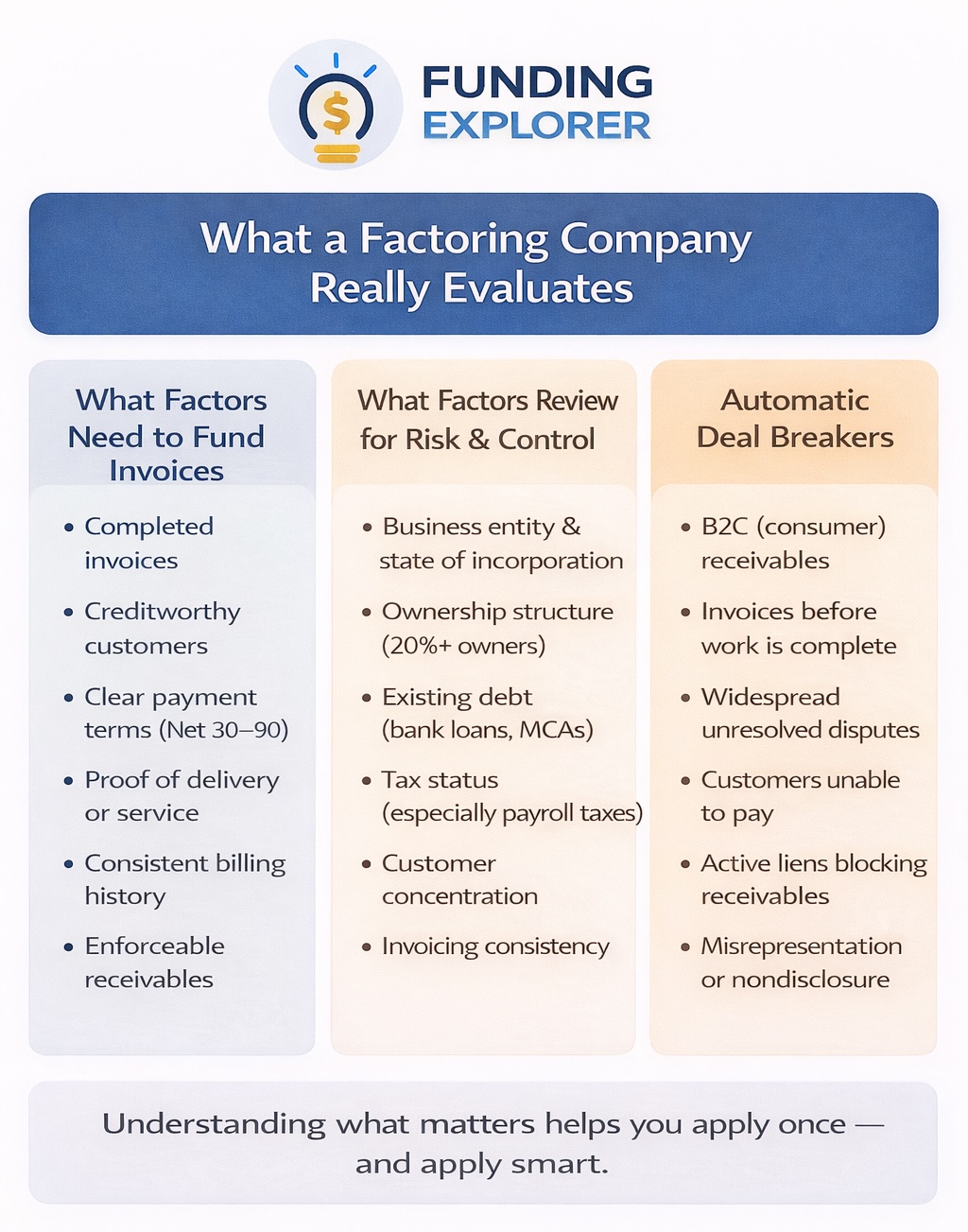
If you’re not sure which category best describes your situation, we can review your:
- Invoices
- Payment terms
- Customer mix
- Revenue model
Then recommend the factoring structure that makes the most sense for your business.
Talk with a Funding Explorer advisor to compare options and get matched with the right partner.
Industry Factoring FAQs
What industries use invoice factoring?
Invoice factoring is common in industries where businesses send invoices to other businesses but may wait 30–60 days to get paid.
Examples include staffing companies, government contractors, infrastructure contractors, equipment rental companies, distributors, transportation businesses, and recurring service providers.
Does invoice factoring work the same in every industry?
No. Every industry has different payment cycles and billing rules.
For example, staffing companies often need weekly payroll funding, while contractors may wait for inspections or project approvals before invoices are paid.
Can small businesses use invoice factoring?
Yes. Many factoring programs are designed for small and growing businesses.
If you invoice reliable customers and have unpaid receivables, factoring can turn those invoices into working capital while you wait for payment.
Why does industry experience matter when choosing a factoring company?
Different industries have different billing practices and payment patterns.
A factoring partner that understands your industry is more likely to structure advances, reserves, and approvals in a way that works with your cash flow.
What if my business works across multiple industries?
Many companies serve customers in more than one industry.
In most cases, factoring is based on the quality of the invoices and the credit of the customers, not just the industry category.
Analia Miguel is an MBA and former CPA with 20+ years in business finance and marketing, including 14 years in alternative business finance. She helps business owners understand their funding options and choose cash flow solutions that truly fit their needs.
Last Updated: March 5th, 2026
Invoice Factoring Expert Insights
Compare Factoring Options for Your Industry
We help business owners compare factoring programs and get matched with partners that understand their industry and cash flow cycle.